After writing about the possible SEO evolution, with the arrival of the conversational search engines, Today I want to reflect on the potential of search engines to interpret (intuit? understand?) the emotional state behind a search. This is a step towards a more personal interaction and a closer bond between user and search engine, which could become something more than what we know today.
Since the “Stone Age” of SEO, when search engine optimization was primarily about including the right keywords and building low-quality backlinks, the world of digital marketing has evolved tremendously. Search algorithms have long since moved beyond simply identifying isolated words; they now attempt to understand the context and intent behind user queries, and frankly, they do it quite well. Concepts such as search intent Search intent and semantics have become central to SEO strategies. But how far can this evolution go? What would happen if search engines not only interpreted what we are searching for, but also how we feel By doing so?
This new frontier where SEO could intersect with "emotional intelligence" is getting closer, thanks to advances in technologies artificial intelligence y natural language processing (NLP). Tools such as Sentiment Analysis Google's Natural Language API is already capable of detecting the emotional tone of a text. This raises an interesting question: if search engines can detect emotions in content, could they influence search results based on those feelings? Could they respond more empathetically, adapting to users' emotions?
In this article, I want to explore the possibility that in the not-too-distant future, search engines will not only understand what users want, but will also adapt to it. how do they feel. From sentiment analysis to the emotional processing of large volumes of data, AI tools could transform the strategies of those of us dedicated to SEO.
This is the beginning of a new era, where "emotional intelligence" could be present in search algorithms, adding a whole new dimension to how we optimize our content for the web.
The evolution of SEO: from keywords to search intent
In the beginning was the verb… or rather, in its early days, SEO was a numbers game. Search engines like Google based their algorithms on factors such as the repetition of keywords within a web page. The more times a relevant keyword appeared, the more likely a page was to rank highly in search results. This practice, known as "«keyword stuffing»"Keyword stuffing" dominated SEO strategies. Early search engine optimizers understood that if they could fill a page with the right word, they would be guaranteed a good ranking (to the point that they added "invisible" keywords in the page's HTML, "playing dirty" with font colors so that the text blended in with the background color).
This purely literal approach had many limitations. Search engines didn't understand the context nor the semantic relations Among the words. A website could appear in the top positions simply by repeatedly mentioning a keyword, even if the content was irrelevant or useless to the user. Soon, Google and other search engines realized that this strategy not only produced a poor user experience but also incentivized deceptive and low-quality tactics.
The real change began when search algorithms evolved to go beyond individual words and started considering the intention behind the search. This change marked the beginning of Semantic SEO, In this era, search engines began to focus on understanding the deeper meaning of a query, rather than simply matching keywords (or picking up other ranking signals, which are equally easy to manipulate). This transition to semantic understanding has been one of the biggest advances in the history of SEO, making optimization strategies more about content relevance than mere word repetition.
Over time, Google has advanced its ability to interpret what a user is actually looking for, beyond the exact keywords they use. This process, known as «"search intent"» o search intent, This has transformed the way search engines process information. Instead of simply matching a keyword with search results, algorithms now try to understand what the user is trying to achieve with their query.
One of the key milestones in this evolution was the implementation of BERT (Bidirectional Encoder Representations from Transformers) at the end of 2018. BERT marked a turning point in Google's ability to understand the full context of a search, by allowing the algorithm to interpret the meaning of words in relation to the other words that surround them. Unlike previous approaches, which analyzed words in sequential order, BERT can read a sentence in a way that... bidirectional, That is, understanding how each word influences the meaning of the whole.
This advance was especially relevant for the natural language processing (NLP), as it allowed Google to interpret complex and colloquial queries much more accurately. With BERT, Google significantly improved in identifying nuances y subtexts in the searches, which made it easier for the results to more accurately reflect the real intention from the user. This capability not only improved results for long or conversational searches, but also marked a significant step towards a more "intelligent" search algorithm in terms of understanding human language.
To illustrate the difference that the introduction of BERT made, Google published several examples on its blog, one of which was the "before" and "after" results for the query "2019 Brazil traveler to USA need a visa".

The word “to” and its relationship to the other words in the query are particularly important for understanding the meaning. It's about a Brazilian traveling to the US, not the other way around. Previously, the algorithms didn't understand the importance of this connection and returned results about US citizens traveling to Brazil. With BERT, Google finally grasps this nuance and knows that “to” actually matters a lot in the context of this query, and therefore provides a much more relevant result.
This shift towards "search intent" not only improves the quality of search results, but also requires content creators to think beyond keywords and consider what users truly need. In this sense, the next challenge for search engines it could be understanding emotions behind the users' queries, to offer results that not only answer a question, but also align with the searcher's emotional state.
For example, if a user searches for “tips for coping with stress,” they don’t just want a list of technical methods; they might also be looking for comfort, emotional support, or practical recommendations from an empathetic perspective. Future algorithms, based on technologies like sentiment analysis, could capture these emotional signals and adjust the results accordingly, providing a more personalized and human experience.
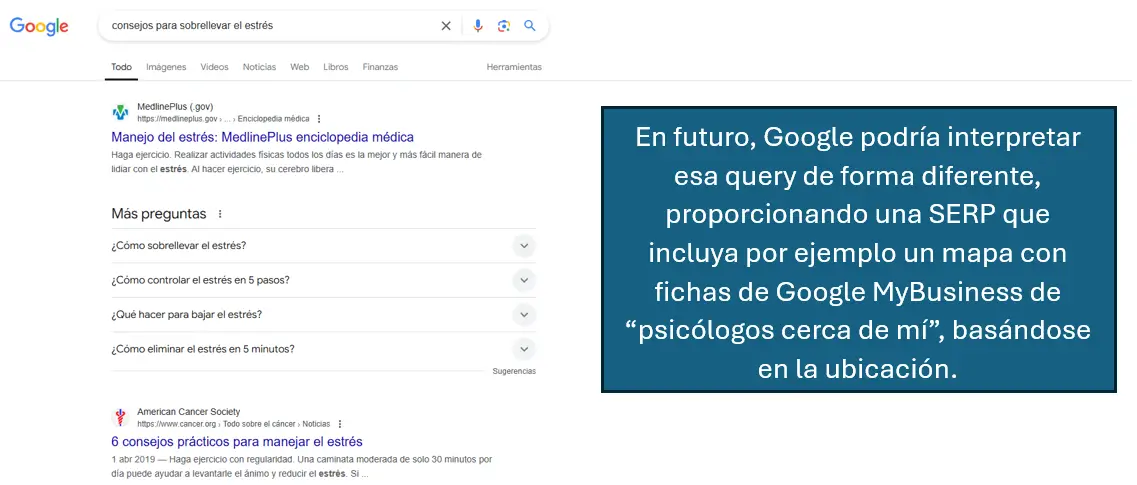
For example, they could include in the SERP results the Google My Business listings of a psychology studio near the location of the person who performed the search, or the number of the nearest health center, to request an appointment with a doctor.
This focus on user intent is the foundation upon which the next evolution of SEO could be built: search engines capable of understanding emotions, This allows for adjusting results not only to what the user wants to know, but also to how they feel when performing the search. This opens the door to new strategies and approaches in content optimization, where the emotional tone of the content could also become a key ranking factor.
Natural Language Processing (NLP): The Path to Better Understanding
He Natural Language Processing Natural Language Processing (NLP) is a branch of artificial intelligence that enables machines to understand, interpret, and generate human language in a meaningful way. Simply put, NLP seeks to bridge the gap between how humans communicate and how computers process information. The challenge lies not only in understanding the words themselves, but also in the... context, the semantic relations and, increasingly, the feeling that underlies language.
Search algorithms, like Google's, use NLP to break down user queries and understand them in a much more sophisticated way than in the past. NLP not only helps search engines recognize keywords and their order, but also to identify the intention who is behind the search.
NLP is also fundamental for search engines generate more relevant answers and closer to natural language, a key point for improving the user experience. This process has been driven by advances such as BERT, which we have mentioned previously, allowing algorithms to understand even the most colloquial and complex queries.
He deep learning and the neural networks These are key technologies behind NLP, as they allow machines to learn and improve their understanding as they process large volumes of text data. Thanks to these technologies, search engines can unravel the meaning of a text based on context, understanding synonyms, variations of the same word or phrase, and better adapting to how humans actually express themselves.
One of the most fascinating applications of Natural Language Processing is the sentiment analysis (Sentiment Analysis). This technique allows machines to identify the emotional tone behind a text, whether it's an article, a review, a social media comment, or even a search engine query. Sentiment analysis categorizes texts as positive, negative o neutrals, helping companies, platforms, and search engines gain deeper insights into the emotions and opinions expressed in user-generated content.
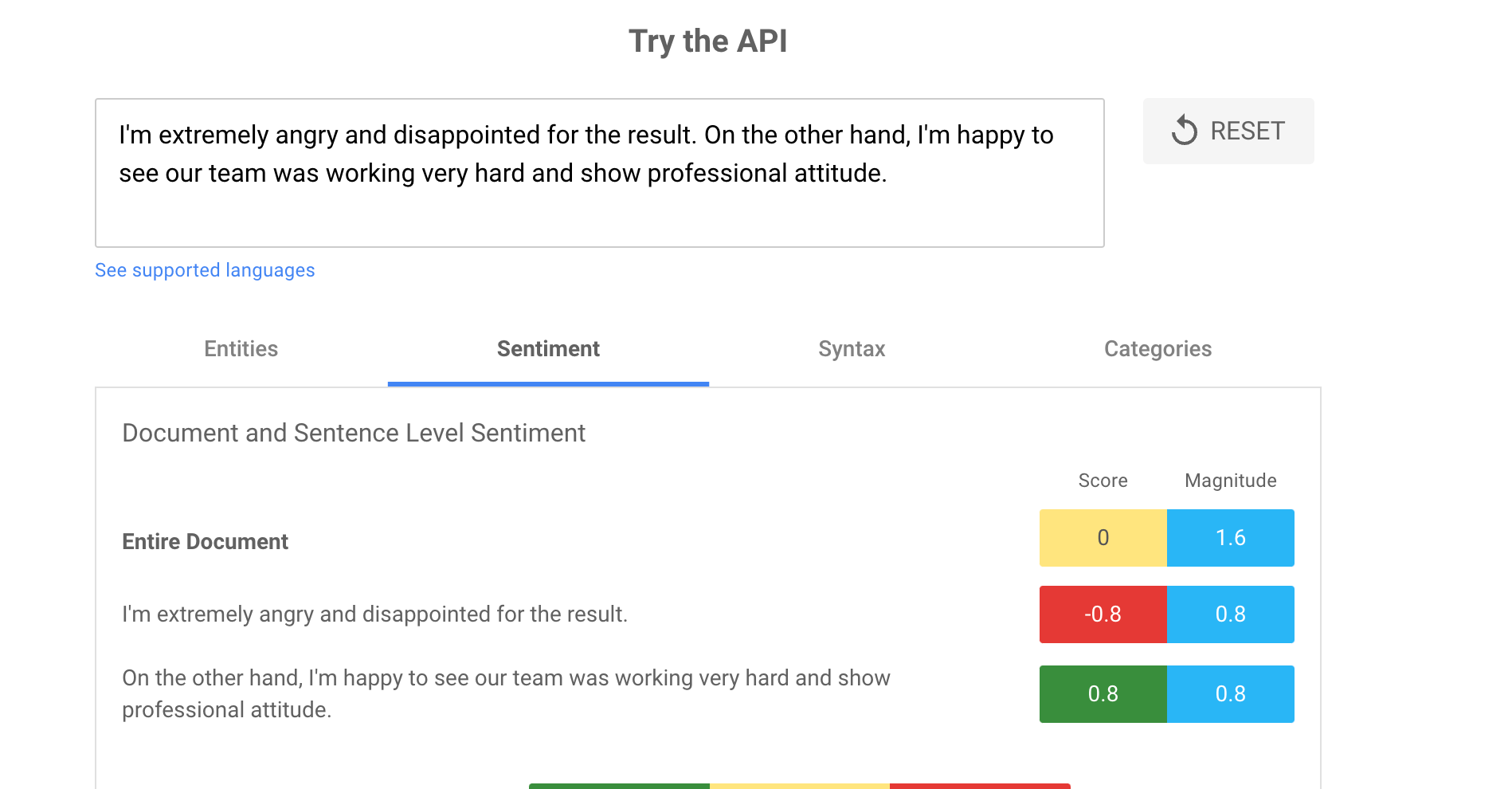
Sentiment analysis is already a widely used tool on platforms like social media, where brands and companies employ it to measure public reaction to products, services, or campaigns. For example, when a new product is launched, companies can automatically analyze thousands of comments on social media through sentiment analysis tools. social listening, to assess whether the reception has been positive or negative. This approach allows for a faster and more efficient response to user feedback.
Within the SEO, Sentiment analysis has even greater potential. Search engines could use this ability to "interpret the mood" of searches to improve the relevance of results and ensure that users receive content that not only answers their question but also reflects a tone appropriate to their emotional state.
Furthermore, as machines improve their ability to detect and respond to emotions, we could see SEO become more focused on How does it feel? the user when they perform a search, which would lead to optimization not only for keywords, but also for the tone and the emotional intention of the texts. For example, content writers could begin to integrate emotionally intelligent writing techniques, aimed at conveying a specific feeling that can better capture the attention of search engines with Sentiment Analysis capabilities.
The use of Sentiment Analysis In search engines, this represents a further step towards a web where results are more human, adapting not only to the user's logical intent but also to their emotional state. This could open new opportunities for content creators, who will need to adapt their SEO strategies to create content that not only solves problems but also... resonate emotionally with their audiences.
This type of adaptation would not only improve the quality of the search experience, but could also increase the user satisfaction. By receiving results that resonate with their emotions, users would feel more understood and valued, which could lead to greater interaction with the content and, ultimately, greater loyalty to search platforms.
Furthermore, the integration of this type of emotional intelligence could be extended to other aspects of the user experience, such as product recommendations or personalized ads.
While this vision may seem futuristic, advances in artificial intelligence and natural language processing suggest we're not so far from achieving this reality. The possibility of search engines becoming more human-like in their understanding of emotions is a path that could shape the future of SEO and the online experience.
Implications for SEO content strategies
With the arrival of “emotionally intelligent” search engines, SEO professionals and content creators will have to rethink their strategies to adapt to this new reality. If sentiment analysis becomes a fundamental part of the search algorithm, it will no longer be enough to focus solely on keywords and the intent behind the search. A deeper approach to the tone and the emotion of the content.
SEO specialists will need to integrate emotional analysis into their content creation process. This means that, in addition to researching relevant keywords and understanding user intent, they will need to consider how their text can evoke certain emotions.
Furthermore, humanizing content will be more important than ever. In an environment where machines can read and understand emotions, content creators will have to build emotional connections stronger connections with their audiences. This could include the use of personal narratives, success stories, and a more empathetic approach to writing.
This also aligns with Google's EEAT guidelines, where the "E" for Expertise and the "A" for Authority play a crucial role. In that sense, adding that personal narrative to the content could be recognized as a sign of authority and expertise.
How to prepare your content strategy for the future of emotional SEO?
As we move further into the era of “emotionally intelligent” search engines, it’s crucial that brands and businesses begin adapting their content strategies to align with this new reality. Here are some recommendations for integrating emotion analysis into your SEO approach:
- Perform a sentiment analysisUse natural language processing tools to evaluate the emotion behind comments and interactions with your content. This will allow you to better understand which tone resonates most with your audience.
- Create emotionally relevant contentDesign your content to evoke specific emotions that align with your users' search intent. For example, if you're targeting people looking for wellness advice, use language that inspires calm and positivity.
- Adopt a narrative approachStories have a powerful emotional impact. Incorporate narratives that connect with your audience's experiences and feelings, which can facilitate a deeper connection.
- Segment your contentConsider creating different versions of content that align with various emotions. For example, an article on mental health could have a different focus depending on whether the reader is feeling anxious or hopeful. This would also somewhat address the issue of... cannibalization, when two similar pieces of content compete for the same keywords.
Implementing these strategies will not only improve your search engine ranking, but also foster a more authentic connection with your audience, promoting long-term loyalty and engagement.
If you're ready to take your SEO strategy to the next level and adapt to a future where emotions play a crucial role, I'm here to help! With nearly 20 years of experience in the industry, I offer consulting services specializing in SEO and the implementation of artificial intelligence and natural language processing (NLP) tools.
Don't get left behind in the evolution of SEO.Contact me And together we can build a more connected and effective digital future for your brand!